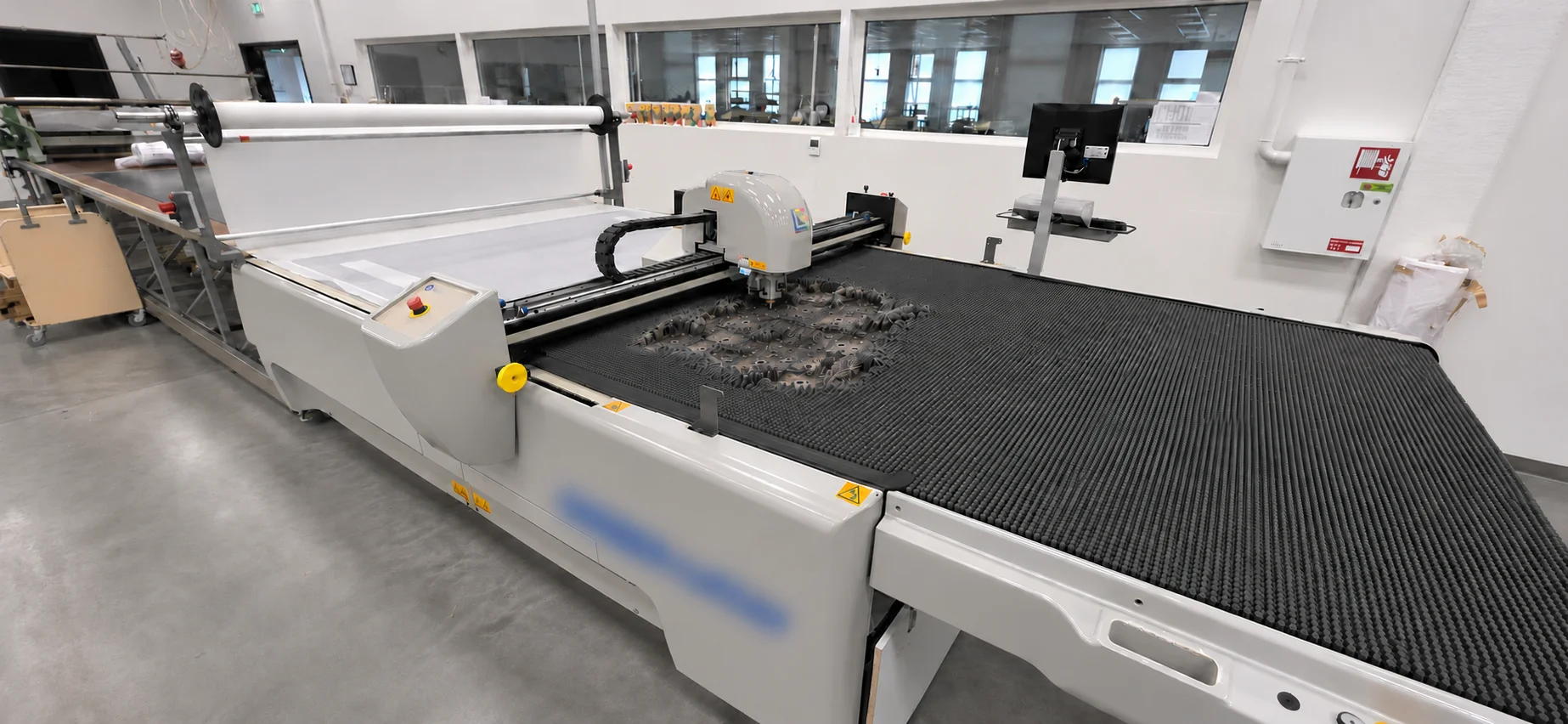
Auto cutter bristle blocks may be small components, but they play an important role in the fabric-cutting process. They support the fabric lay while allowing the cutter blade to pass through the layers. When the bristles become worn, uneven, or damaged, the cutting surface may no longer support the material consistently.
Knowing what to look for can help garment manufacturers plan replacements, troubleshoot cut quality, and keep production running smoothly.
What does a bristle block do?
Bristle blocks form the supporting surface of many automatic fabric cutting tables. Their bristles hold the fabric lay in position while allowing the cutting blade to enter the surface without striking a solid table.
The blocks are consumable parts. Their condition changes with use, fabric type, cutting volume, blade condition, and machine settings. Replacement timing therefore depends on the operating conditions and the machine manufacturer’s guidance.
Signs that a bristle block may need replacement
Inspect the cutting area regularly and look for changes such as:
Uneven or flattened bristles: Some sections may sit noticeably lower than the surrounding area.
Missing, broken, or bent bristles: Gaps or damaged sections can reduce support beneath the fabric.
A rough or inconsistent surface: The cutter may travel across areas with different levels of resistance or support.
Visible wear concentrated in cutting paths: Frequently used zones may wear faster than less-used areas.
Movement or instability: A block that no longer sits securely may affect the cutting surface.
Persistent cut-quality problems: If defects continue after checking the blade, machine settings, and fabric lay, inspect the bristle surface as part of troubleshooting.
A single symptom does not prove the bristle block is the cause. Check the blade, machine setup, fabric spreading, and other relevant components too. Follow the machine maker’s maintenance instructions, especially before inspecting or replacing parts.
How worn bristle blocks can affect cutting quality
Worn or uneven bristles can provide inconsistent support under the fabric lay. Depending on the machine and the material being cut, that may contribute to issues such as:
Inconsistent edges or less accurate cut shapes
Fabric shifting or lifting during cutting
Differences in cut quality across the table
More frequent rechecks, adjustments, or production interruptions
These issues can have several possible causes. Treat bristle-block condition as one point in a wider inspection rather than assuming it is the only source of a cutting problem.
How to choose a compatible replacement
A bristle block that looks similar may still differ in size, design, or fit. Before ordering, check:
Machine brand and model
Record the exact information from the machine label or documentation.Part number or existing block identification
Compare the number with your machine’s parts list or supplier documentation.Dimensions and shape
Measure the block carefully if the part number is unavailable. Check its overall size and any specific mounting or foot design.Bristle and block specifications
Confirm the replacement matches the required type and specification for your machine and application.Supplier fitment confirmation
Share the machine model, part number, dimensions, and clear photos of the existing part when asking a supplier to verify compatibility.
Avoid choosing a replacement based only on a broad description such as “auto cutter bristle block.” Confirm fitment against the specific machine and part requirements before installation.
A simple inspection routine
A consistent inspection routine can help catch wear before it disrupts production:
Check the cutting surface for uneven height, missing bristles, and visible damage.
Pay particular attention to high-use cutting zones.
Record inspection dates and any replaced blocks.
Review cut-quality complaints alongside maintenance records.
Follow the machine manufacturer’s cleaning, maintenance, and replacement guidance.
There is no universal replacement interval for every cutter. Usage, materials, machine design, and operating conditions all affect wear.
Where FUF Global fits in
FUF Global supplies garment machinery spare parts, including auto cutter accessories and bristle blocks for a range of machine brands and models. Its catalog includes options associated with brands such as Lectra, Bullmer, Gerber, FK, IMA, and others.
If you are unsure which replacement fits your cutter, FUF Global can help you identify the part using your machine model, part number, measurements, or reference photos. Visit FUF Global’s bristle block and cutting machine parts catalog or contact the team to discuss your requirements.
Frequently asked questions
How often should auto cutter bristle blocks be replaced?
There is no single interval that suits every machine. Inspect them regularly and follow the machine manufacturer’s recommendations. Replace blocks when wear or damage affects the cutting surface or when your maintenance guidance calls for it.
Can worn bristle blocks cause poor cutting results?
They can contribute to inconsistent support and cut quality, but they are only one possible cause. Check the blade, fabric lay, machine settings, and other relevant components as well.
Can I select a replacement by appearance alone?
It is safer to verify the machine model, part number, dimensions, and design. If you are uncertain, send those details and photos to a qualified parts supplier for fitment confirmation.
What information should I send when requesting a replacement?
Include the machine brand and model, the part number if available, the required quantity, measurements, and clear photos of the existing block. This helps the supplier check the match more accurately.
Keep the cutting surface in good condition
Bristle blocks gradually wear as part of normal production. Regular inspection, attention to changes in cut quality, and careful compatibility checks can help maintenance teams identify when a replacement is needed.
When it is time to source a new block, FUF Global provides a catalog of garment machinery spare parts and support to help buyers find an option suited to their machine. Contact the team with your machine details to ask about a compatible replacement.